Layers, short days and slow trains
The unglamorous part of a winter trip: what to wear, how to spend four hours of light, and why a spare day beats a tight connection.
These notes are general and informational only, not medical or safety advice. Conditions vary widely; follow local guidance, official weather warnings and the advice of qualified professionals, and seek medical help if you are worried about cold injury.
The three-layer idea, and why cotton lets you down
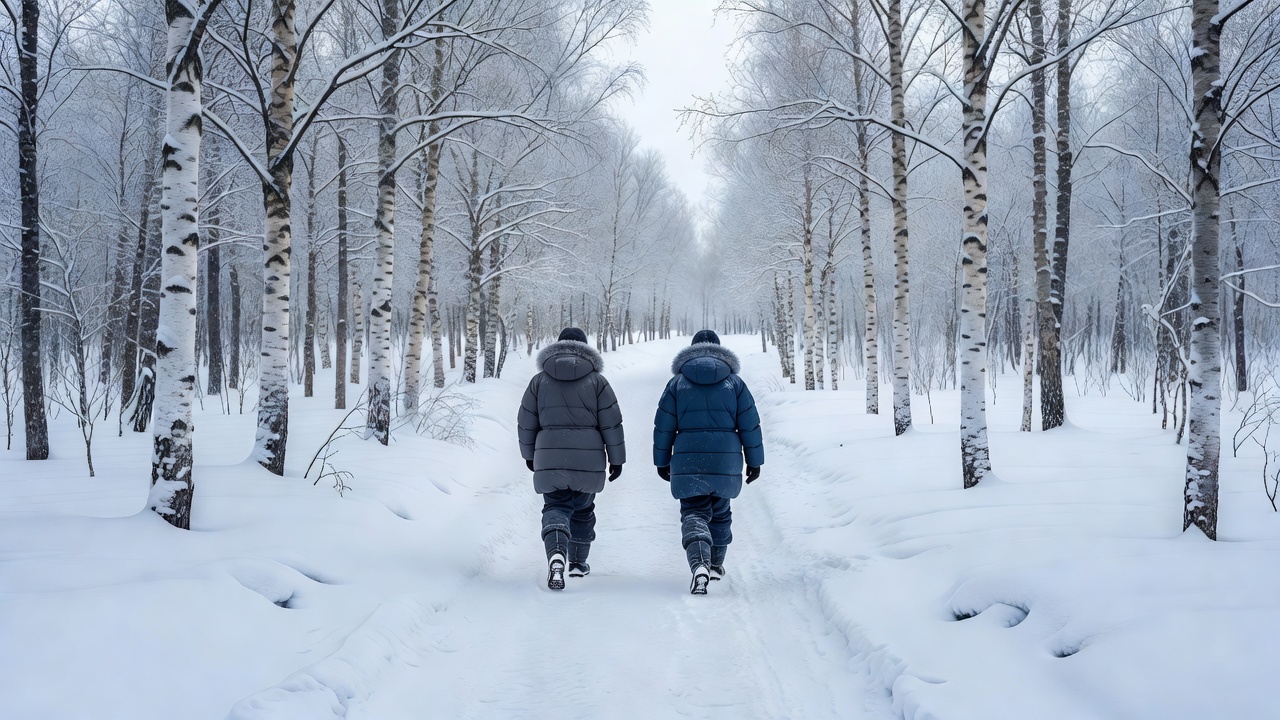
Cold-weather clothing works as a system of layers rather than one heavy coat. Next to the skin goes a base layer that moves moisture away, usually merino wool or a synthetic fabric. Over it, an insulating mid layer such as fleece, a wool jumper or a light down jacket traps warm air. On the outside, a windproof and ideally water-resistant shell keeps wind from stripping that warmth away. On a cold, still night in Rovaniemi you might wear all three plus a thick down parka; on a damp day in Tromsø the shell matters most.
Cotton is the common mistake. It holds sweat, and damp fabric pulls heat from the body. A cotton T-shirt under a good jacket after a brisk walk to a market can leave you chilled for the rest of the evening. Layers also let you adjust: take one off on a warm train, add it back on the platform.
Hands, feet, face
The extremities give out first. Mittens keep fingers warmer than gloves because the fingers share heat; a thin liner glove underneath lets you use a phone or camera briefly without bare skin. A hat that covers the ears and a scarf or neck tube that can be pulled over the nose handle wind on open squares and riverbanks.
For feet, choose boots with a thick sole and enough room for a wool sock without squeezing. Tight boots cut circulation and feel colder. In icy cities a pair of slip-on ice grips, sold in hardware and outdoor shops across the north, makes pavements far safer. Bring a spare pair of socks in your day bag; changing damp socks mid-afternoon is one of the cheapest comforts available.
Children in frost
Small children lose heat faster than adults and often do not report being cold until they are miserable. A child in a pushchair is not moving and needs more insulation than one who is walking, ideally a footmuff or sleeping-bag style cover. Check cheeks, noses and fingers regularly. Pale or waxy patches of skin on the face are a sign to go indoors and warm up gently; if you are concerned, ask a local pharmacy or doctor.
Plan short outdoor sessions with indoor breaks: a café, a museum or the train station. Sledging, snow castles and lantern walks hold children's attention better than long queues for a single attraction.
Using short days well
Daylight is the scarcest resource on a winter trip. In the Alps near the solstice you have a little over eight hours; in Rovaniemi about two; in Tromsø a few hours of twilight with no sunrise. Put the activities that need light, such as walks, viewpoints, cable cars and photography, in the middle of the day. Save museums, saunas, swimming halls and shopping for the afternoon, and let the early dark work for you: Christmas markets, ice lanterns and illuminated sculptures all look best after sunset, which in December arrives early in every city on this site.
The Arctic twilight, a long blue hour on either side of noon, is one of the most beautiful parts of the season. It also passes quickly, so leave your accommodation before it starts rather than during it.
Cold and electronics
Phone and camera batteries drain fast in deep cold. Keep devices in an inside pocket close to your body and carry a small power bank. When you come in from minus twenty, warm moist air can condense on and inside a cold camera; leaving it in a closed bag for a while as it warms up reduces that. Paper maps and a written note of your accommodation address are useful backups when a phone shuts down at the worst moment.
Where to check conditions
National weather services publish forecasts and warnings in English or with clear symbols: the Norwegian Meteorological Institute (through its yr service), the Finnish Meteorological Institute, Sweden's SMHI, Austria's GeoSphere Austria, Météo-France, the Japan Meteorological Agency and Environment Canada among them. In the mountains, regional avalanche warning services publish daily bulletins; anyone leaving marked pistes or paths should read them and, ideally, go with a qualified guide.
Rail operators post disruption notices on their own channels. Check them on the morning you travel, not only when booking.
Slow trains and spare days
Rail is the calmest way to reach most of the places on this route, and in snow it is often more reliable than roads. It is not immune to winter, though. Mountain lines can close for avalanche control, points freeze, and long northern routes run late after storms. Build in slack: avoid tight same-day connections to flights, and if a trip hinges on one overnight train, consider arriving a day before any fixed event such as a festival opening.
Several overnight services suit this route. Austria's Nightjet network links Vienna with cities in Germany, Switzerland and beyond. Swedish overnight trains run from Stockholm to Kiruna, Abisko and Narvik. Finland's state railway runs sleepers from Helsinki to Rovaniemi. In Japan, JR Hokkaido covers Sapporo, Otaru and Hakodate; in Canada, VIA Rail runs between Montreal and Quebec City. Rail passes such as Interrail and Eurail cover many European routes, but sleeper berths and some fast trains need a separate reservation.
December weekends in the Alpine market towns and the weeks before Christmas in Rovaniemi are the busiest periods on the route. Booking accommodation and reservations early, and reading cancellation terms carefully, protects you more than chasing a late bargain. Travel insurance terms vary; read what they say about weather delays before you rely on them.
A short packing list for deep cold
- Merino or synthetic base layers, top and bottom
- Fleece or wool mid layer, plus a light down jacket
- Windproof outer shell or insulated parka
- Mittens with thin liner gloves
- Hat covering the ears, neck tube or scarf
- Insulated boots with room for thick wool socks, and a spare pair of socks
- Slip-on ice grips for city pavements
- Power bank, kept warm in an inside pocket
- Small reflector for walking in the dark
- Lip balm and a rich hand cream for dry indoor heat
With the bag packed, revisit the winter route overview or read the winter travel questions.