Tromsø, Rovaniemi and the dark-sky north
Weeks without sunrise, skies that may or may not light up, and the overnight trains that carry you into Lapland.
What the dark season really looks like
"Polar night" sounds like total darkness, but at Tromsø's latitude it rarely is. Between roughly late November and mid-January the sun stays below the horizon, yet for a few hours around midday the sky turns deep blue, pink and pale orange, bright enough on a clear day to walk a snowy path without a headtorch. Norwegians call this season mørketid, the dark time. Further south, in Rovaniemi, the sun still clears the horizon at the solstice, staying up for about two hours and sliding low across the forest.
That light shapes how a day works. Outdoor activities fit best between about 10:00 and 14:00. Afternoons, which go dark early, suit saunas, museums and long dinners. The aurora, if it appears, is a night event that may show up at any time between early evening and the small hours, so a short nap after dinner is a sensible habit on clear nights.
Visitors from further south are often surprised by how bright snow makes everything. Even in twilight, snow reflects what little light there is, and a full moon on fresh snow can feel almost like dusk.
How the aurora works, without the hype
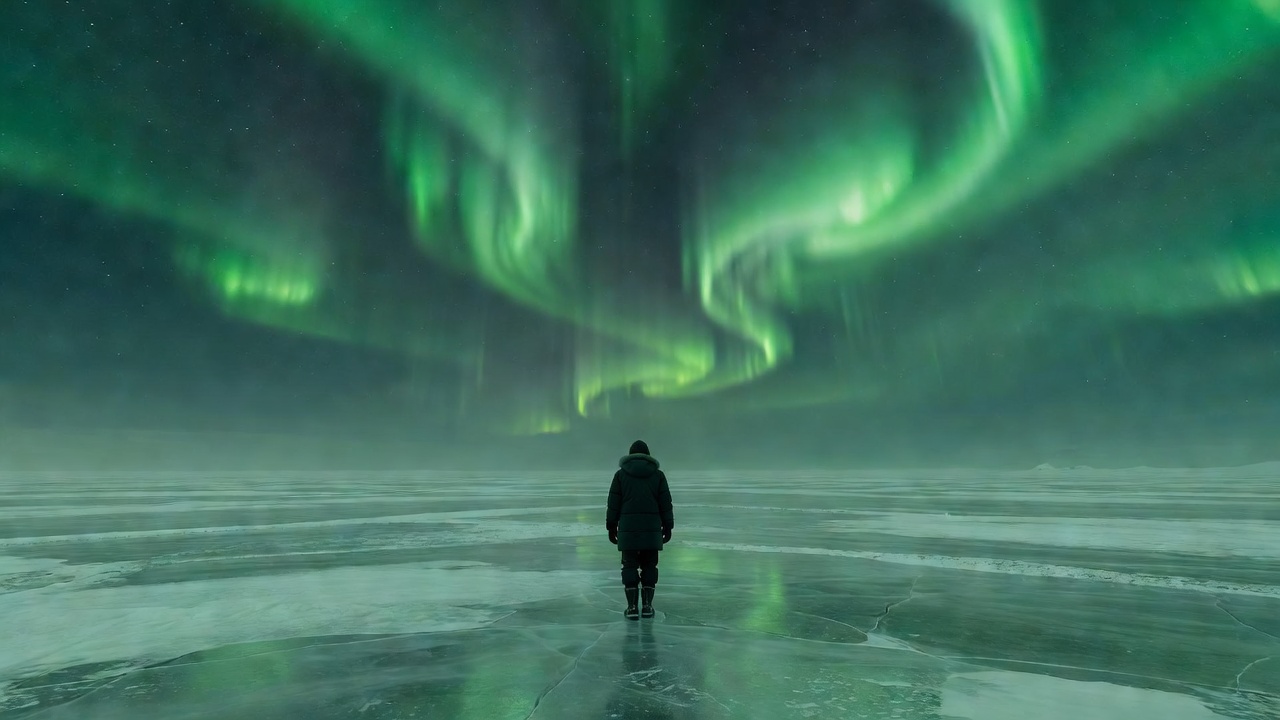
The northern lights appear when charged particles from the sun reach the upper atmosphere, mostly within a ring-shaped zone around the geomagnetic pole called the auroral oval. Northern Norway, Swedish Lapland and Finnish Lapland lie under or near that oval, so aurora is possible on many dark nights between roughly September and late March. In summer the sky never gets dark enough to see it.
Two things decide whether you see a display: solar activity and cloud. Forecasts often quote the Kp index, a measure of global geomagnetic activity, but at these latitudes even a modest Kp value can produce visible aurora overhead. Clear sky is the factor visitors most underestimate. A week of coastal cloud can hide everything, which is why some travellers split a trip between the coast and drier inland areas. Nobody can promise a sighting, and a tour that guarantees one is overselling.
Photographs often show stronger greens and purples than the eye sees, because cameras gather light over several seconds. A faint display can look grey-white to the naked eye until it brightens. Give your eyes fifteen minutes away from screens and streetlights before deciding there is nothing to see.
Tromsø: an island city in the polar night
Tromsø sits on an island roughly 350 kilometres north of the Arctic Circle, joined to the mainland by a long bridge. On the far side stands the Arctic Cathedral, a white triangular church completed in 1965 that is lit at night and easy to spot from the harbour. The Fjellheisen cable car lifts you onto the mountain behind it for a view over the city and the surrounding fjords, weather permitting.
Because of the Atlantic influence, the coast here is milder and wetter than inland Lapland. Expect temperatures that hover a few degrees below freezing more often than deep cold, along with wind and changeable cloud. That mildness helps comfort but not aurora odds; many guided trips drive inland or toward the Finnish border to find clear sky.
The city fills the dark season with its own events. The Tromsø International Film Festival takes place in January, and the Sámi Week around 6 February, the Sámi National Day, has traditionally included reindeer racing through the city centre. There is no railway in Tromsø. Most visitors fly in, often via Oslo; the nearest station is Narvik, on the Ofoten Line from Sweden, and buses connect Narvik with Tromsø in several hours.
Abisko and Kiruna: Swedish Lapland by rail
Abisko, about 200 kilometres north of the Arctic Circle on the Swedish side, is known for relatively clear skies. Mountains to the west catch much of the moisture coming off the Atlantic, leaving the local sky drier than the Norwegian coast. The Aurora Sky Station sits on Mount Nuolja, reached by chairlift, and Abisko National Park around it is where the long-distance Kungsleden trail begins. Winter routes in the park are for experienced, well-equipped walkers; most visitors stay on marked paths near the station.
The appeal for rail travellers is simple: overnight trains from Stockholm run north through Kiruna to Abisko and on to Narvik. It is a long ride, covering an afternoon, a night and a morning, but you wake in Lapland without a flight.
Kiruna itself is an iron-ore town in the middle of an unusual move, with its centre being relocated eastward because the mine below has destabilised the old ground. Nearby, in Jukkasjärvi, the Icehotel is rebuilt each winter from ice taken from the Torne River, then left to melt back in spring.
Rovaniemi: on the Arctic Circle line
Rovaniemi, the capital of Finnish Lapland, sits on the Arctic Circle and is the most family-oriented stop on this route. Santa Claus Village, a few kilometres north of the centre, straddles the circle line and draws large crowds in December, when prices and demand peak. The Arktikum, a science centre and museum about Arctic nature and northern peoples, is worth a long afternoon when the light has gone. Ounasvaara, a hill on the edge of town, has ski trails and views over the river valleys.
Inland Lapland is markedly colder than the Norwegian coast. Nights well below minus twenty are not unusual, and calm, clear nights, the best ones for aurora, are often the coldest. Finland's state railway runs overnight trains between Helsinki and Rovaniemi, including car-carrying services, taking roughly half a day. A sleeper cabin with children can be easier than an early flight.
Coastal grey or inland frost
Choosing between Tromsø and Lapland is partly choosing a kind of cold. The coast offers milder temperatures, a city with restaurants and harbour views, and frequent cloud. Inland Abisko and Rovaniemi offer drier air, quieter nights and harder frost. Couples who want evenings out often prefer the coast; families with a sledging plan may prefer the snow depth and stillness inland. Some people split a week between the two.
Season windows in the far north
| Place | Light in midwinter | Aurora window | Seasonal events | Getting there |
|---|---|---|---|---|
| Tromsø | Sun below horizon roughly late November to mid-January | About September to late March | Film festival in January; Sámi Week in early February | No railway; fly, or bus from Narvik |
| Abisko | Sun absent for several weeks around the solstice | About September to late March | Aurora Sky Station evenings | Overnight train from Stockholm |
| Kiruna and Jukkasjärvi | Very short or no daylight in late December | About September to late March | Icehotel, usually from December into spring | Overnight train from Stockholm |
| Rovaniemi | About 2 hours of sun at the solstice | About September to late March | Christmas season through December | Overnight train from Helsinki |
Approximate patterns; check operators and organisers for current details.
Notes for families in the dark season
Children adapt to the dark faster than adults expect, but sleep routines can drift when it is dark at three in the afternoon. Keep mealtimes regular and get outside in the midday twilight. In Finland pedestrians are expected to wear a small reflector in the dark, and they are sold almost everywhere; they are a good idea in all three countries.
Husky, reindeer and snowmobile trips are popular. Ask operators about minimum ages, how long children sit still in the cold, and how the animals are kept. For warmer, lower-latitude festivals, continue to sculpture parks and lantern nights in deep frost.