Sculpture parks and lantern nights in deep frost
Three cities that turn river ice and packed snow into public architecture each winter, and what it takes to stand among it after dark.
How a frozen city gets built
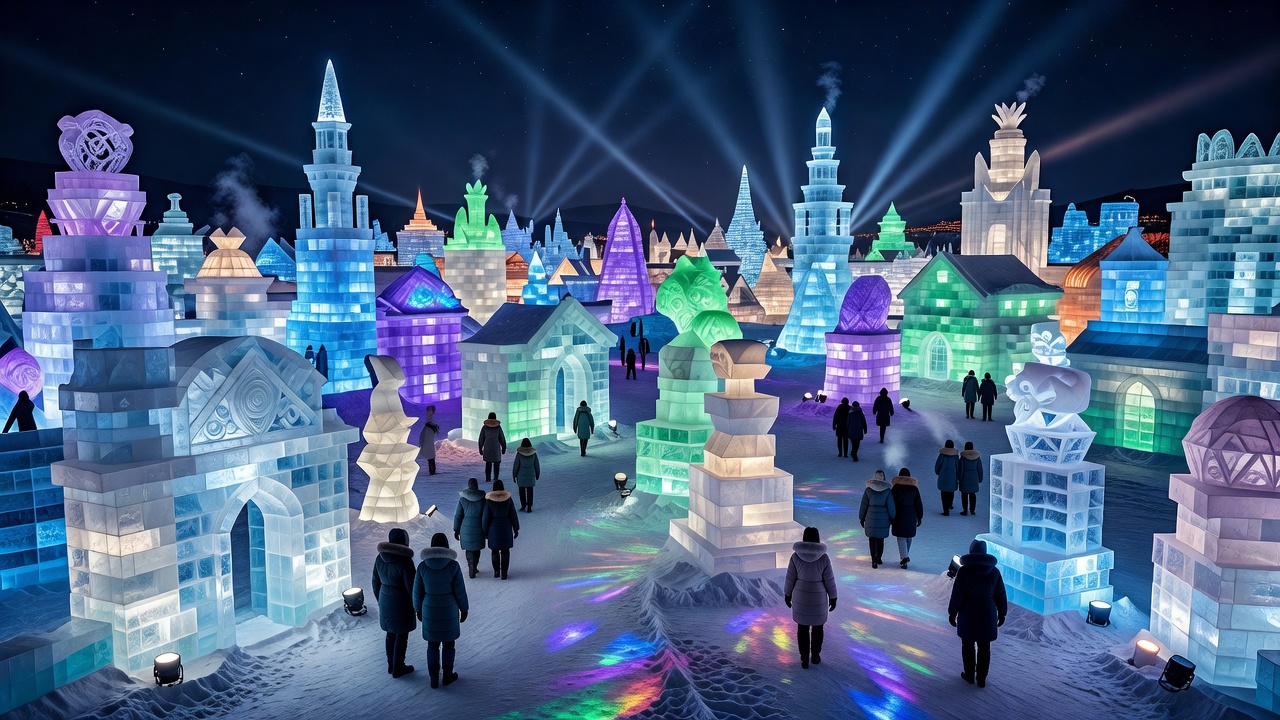
Ice and snow festivals rely on two different materials, and knowing the difference helps you read what you are looking at. Ice sculptures are carved from blocks, usually cut from a frozen river or lake once the ice is thick enough, then stacked like masonry and joined with water that freezes them together. Coloured lights can be set inside or behind the blocks, which is why ice works best after dark. Snow sculptures are made from snow compacted into large forms, then carved with shovels, saws and fine tools. They are opaque and read best in daylight or under floodlights from the front.
Both depend on sustained cold. A warm spell can soften detail, close sections for safety or force repairs, which is one reason exact opening and closing dates are announced year by year rather than fixed in advance.
Harbin: a city of river ice
Harbin, in China's far north-east province of Heilongjiang, hosts the Harbin International Ice and Snow Sculpture Festival. The official opening usually falls in early January, though some sites open earlier when the cold allows, and the season generally lasts into February. Blocks are cut from the frozen Songhua River, which runs through the city, and assembled into lit buildings, towers and slides.
The festival is spread across several sites. Harbin Ice and Snow World is the largest, a park of illuminated ice structures that is busiest in the evening. Sun Island, across the river, is known for snow sculpture. Zhaolin Park in the city hosts the ice lantern displays that belong to the oldest strand of the tradition, which grew from local lanterns made by freezing water in buckets. Between sites, Central Street with its early twentieth-century façades and the green-domed Saint Sophia Cathedral are worth a slow walk.
The cold is the defining fact. January temperatures in Harbin commonly fall below minus twenty Celsius, and colder nights are normal. Visitors who stay out for hours at Ice and Snow World need the kind of layering described on our planning page, plus spare batteries for phones, which drain quickly. China's high-speed rail network links Beijing with Harbin; depending on the service, the ride takes the better part of a day's daylight rather than an overnight trip.
Sapporo: snow sculpture in early February
The Sapporo Snow Festival on Japan's northern island of Hokkaido runs for about a week in early February. It began in 1950, when local high school students built six snow statues in Odori Park, and grew into one of the largest winter events in Japan. Today the main site in Odori Park, a long park strip through the city centre, holds very large snow sculptures, some modelled on famous buildings, alongside many smaller pieces.
A second site in the Susukino entertainment district focuses on ice sculptures, which look best after dark. A third, family-oriented site at Tsudome has traditionally offered snow slides and play areas. Entry to the main outdoor sites has generally been free, which makes the festival easy to visit in short stints between warm cafés.
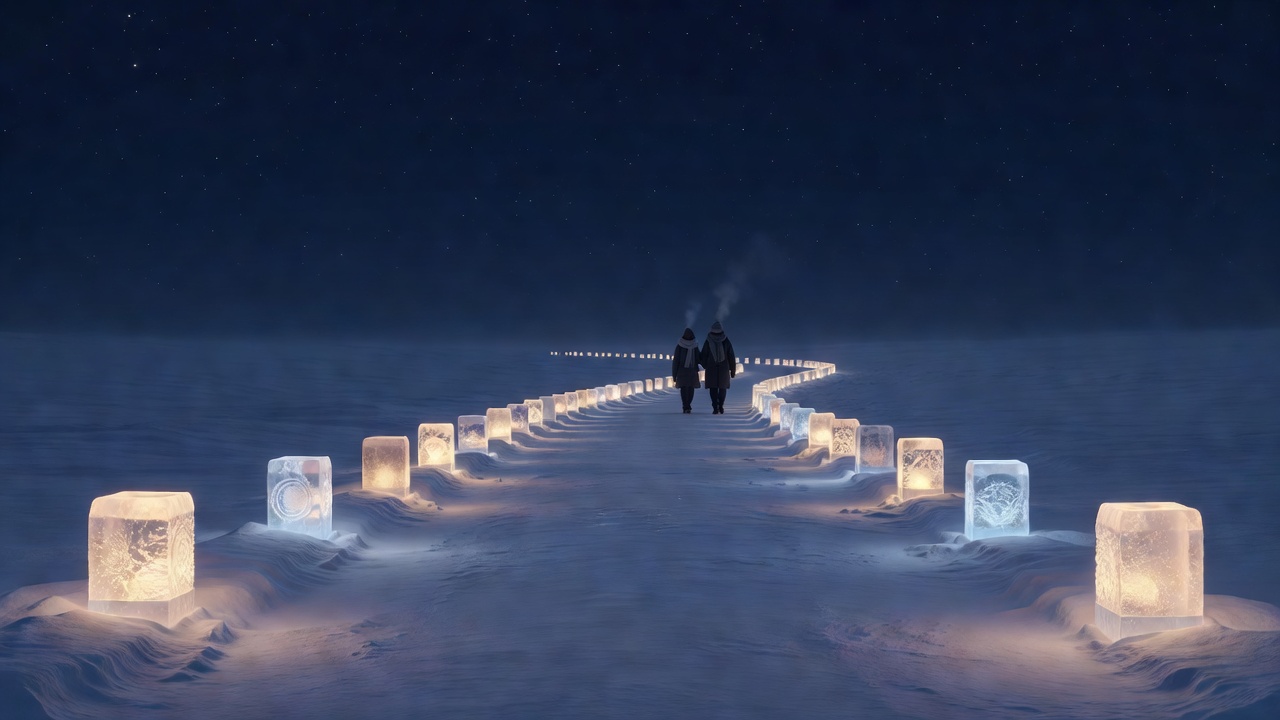
Sapporo is milder than Harbin, though still well below freezing on many February days, and the snow is deep and frequent. Nearby Otaru, a canal town reached in under an hour by train, holds the Otaru Snow Light Path in February, with candles and small lanterns set in snow along the old canal and streets. From Tokyo, the Hokkaido Shinkansen runs to Shin-Hakodate-Hokuto, where a limited express continues to Sapporo in a few more hours. Most visitors fly into New Chitose Airport instead.
Quebec City: a carnival on the St. Lawrence
The Carnaval de Québec, or Quebec Winter Carnival, takes place in late January and into February. Its mascot, Bonhomme Carnaval, a snowman in a red cap and arrow sash, presides over night parades, snow sculpture, outdoor music and an ice palace near the Parliament Building. One of its oldest spectacles is the ice canoe race, in which teams haul and paddle canoes across the partly frozen St. Lawrence River, a reminder of the boats that once carried people and mail across in winter.
The walled old town, a UNESCO World Heritage site, is a winter sight in itself, with steep streets, stone houses and the Château Frontenac above the river. Snowfall in Quebec is heavy and the wind off the river can be sharp; minus fifteen with wind feels colder than the number suggests. VIA Rail trains connect Montreal and Quebec City in a little over three hours. If you have time, Ottawa's Winterlude, with skating on the Rideau Canal when ice conditions permit, makes a second February stop.
Standing still is the hard part
Ice festivals are colder than they look in photographs because you move slowly. You stop to look, queue for a slide, wait for a parade. Plan short loops of forty minutes or so, then head indoors to warm up. Paths between sculptures are often polished ice, so grip on your boots matters as much as insulation. Keep an eye on children's cheeks and fingers, and cover them before they complain, because small children often do not notice cold until it hurts.
Festival seasons side by side
| Festival | Usual timing | Typical cold | Best seen | Rail access |
|---|---|---|---|---|
| Harbin Ice and Snow | Opens early January, runs into February | Commonly below −20 °C | Ice after dark, snow by day | High-speed rail from Beijing |
| Sapporo Snow Festival | About a week in early February | Below freezing, frequent snow | Snow by day, Susukino ice by night | Shinkansen plus limited express |
| Otaru Snow Light Path | February, around the Sapporo festival | Below freezing | Early evening | Local train from Sapporo |
| Quebec Winter Carnival | Late January into February | Often −10 to −20 °C with wind | Night parades, daytime races | VIA Rail from Montreal |
| Icehotel, Jukkasjärvi | Usually December into spring | Inland Lapland cold | Day tours or overnight | Train to Kiruna |
Dates and conditions vary each winter. Check official festival announcements for the current year.
Which one suits which trip
Harbin is the most spectacular and the most demanding, best for adults or older children who handle severe cold well. Sapporo is the gentlest for families, with free sites, warm indoor food halls and good public transport. Quebec combines a festival with a walkable historic city and an easy rail link from Montreal. For snow towns closer to Europe, return to the Alpine market route or the Arctic north.